
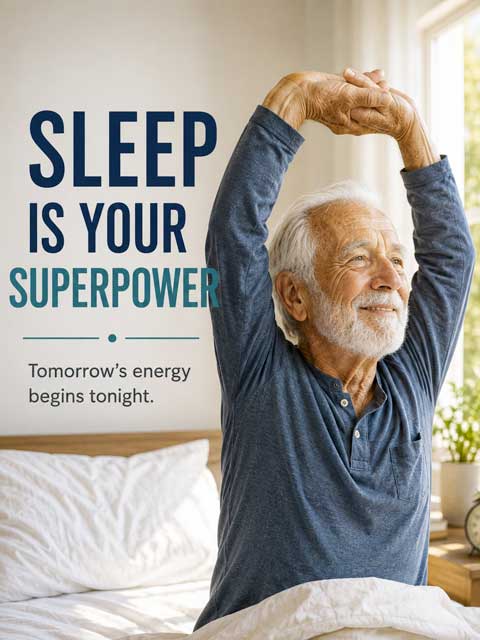
Sleep Is Your Superpower
Why Better Rest Matters More as We Age
We spend nearly a third of our lives sleeping.
Yet sleep is often the first thing we sacrifice when life gets busy.
We stay up late.
We wake up early.
We tell ourselves we’ll catch up later.
But sleep isn’t simply downtime.
It is one of the body’s most important periods of restoration.
While we sleep, the brain processes information, memories are consolidated, tissues recover, and many of the systems responsible for keeping us healthy perform important work.
As we age, protecting our sleep becomes an important part of protecting our healthspan.
Sleep Supports Your Brain
Your brain doesn’t simply turn off when you fall asleep.
It remains remarkably active.
Sleep plays an important role in learning, memory, attention, and emotional regulation.
That’s why a poor night’s sleep can leave us feeling foggy, forgetful, or irritable the following day.
Giving your brain adequate rest helps prepare it for tomorrow.
Sleep Helps the Body Recover
Movement and strength are important parts of healthy aging.
But recovery matters too.
Sleep gives the body time to repair and restore itself after the activities of the day.
Think of movement and sleep as partners.
One challenges the body.
The other gives it an opportunity to recover.
Sleep Affects Your Mood
Almost everyone knows what it feels like to face the day after a poor night’s sleep.
Small frustrations feel bigger.
Motivation can disappear.
Energy drops.
Quality sleep supports emotional regulation and can make it easier to participate in the activities and relationships that bring us joy.
Your Daily Routine Can Affect Your Night
Better sleep often begins long before bedtime.
What we do during the day can influence how well we sleep at night.
Simple habits can help:
- Get natural light during the day.
- Move your body regularly.
- Maintain a consistent wake-up time.
- Limit caffeine later in the day.
- Create a calming evening routine.
- Keep your bedroom comfortable, quiet, and dark.
- Give yourself time to unwind before bed.
Healthy sleep is often built through routine.
Don’t Underestimate Daytime Engagement
There is another part of sleep we don’t talk about enough:
How we spend our days.
Days filled with movement, learning, social interaction, purpose, and meaningful activity create a natural rhythm between engagement and rest.
Having somewhere to go and something to look forward to can help create structure in our days.
And structure matters.
Sleep Problems Shouldn’t Be Ignored
Occasional restless nights happen to almost everyone.
Persistent difficulty sleeping, loud snoring, waking frequently, excessive daytime sleepiness, or major changes in sleep should be discussed with a healthcare professional.
Better sleep isn’t about chasing perfection.
It’s about giving your body the opportunity to restore itself.
Rest Is Part of the Longevity Lifestyle
Healthy aging isn’t simply about doing more.
Sometimes it’s about recovering better.
Movement.
Nutrition.
Connection.
Purpose.
Learning.
And sleep.
They aren’t separate pieces of health.
They work together.
At the Longevity Day Club, our vision of healthy aging includes helping people build days filled with activity, connection, curiosity, and purpose—followed by the restorative rest our bodies and minds need.
Because tomorrow’s energy begins tonight.
Pilar’s Perspective
We talk so much about what people should do to age well.
Exercise more.
Eat better.
Stay social.
Keep learning.
But there’s another side of longevity that deserves just as much attention:
Recovery.
Sleep is when our bodies and brains get an opportunity to restore themselves.
I’ve come to believe that healthy aging isn’t about filling every minute of the day.
It’s about creating a healthy rhythm between activity and recovery.
Live fully during the day.
Rest well at night.
And give yourself the energy to do it again tomorrow.
Did You Know?
Sleep plays an important role in memory, mood, physical recovery, immune function, and overall well-being.
A healthy day and a healthy night are more connected than we sometimes realize.
🌱 Longevity Day Club Challenge
Create a Better Bedtime Routine
For the next seven nights, choose one sleep-supporting habit:
🌙 Go to bed around the same time.
📱 Put screens away 30 minutes before bed.
☀️ Get outside for morning light.
🚶 Move during the day.
☕ Skip late-afternoon caffeine.
📖 Read or listen to calming music before bed.
At the end of the week, ask yourself:
Do I feel different in the morning?

Why Hearing Is an Important Part of Healthy Aging
Hearing changes can happen so gradually that we may not notice them at first.
The television…

Why Balance Matters Long Before You Have a Fall
Most of us don’t think about balance until we lose it.
We walk across a parking lot, step off a…
 Call Now
 Schedule a Free Discovery Day